
Four years ago, Maryland Republicans had a popular two-term governor, Larry Hogan, and had won three of the previous five gubernatorial races. The party had won county executive races in the Baltimore suburbs, including Howard and Anne Arundel counties, in recent cycles. And it had a near lock on power in places such as Frederick County and the Eastern Shore.
The party’s rightward shift since has mirrored national Republicans. But, where President Donald Trump enticed new voters, GOP candidates such as two-time gubernatorial nominee Dan Cox have brought nearly zero crossover appeal needed to win Maryland races.
That’s left the party in its current anemic state: another gubernatorial drubbing, losing ground in General Assembly, county executive and county council contests and ceding once solid red territory. The losses leave the party with a depleted bench from which to rebuild.
And soon Republicans won’t even be the second fiddle in Maryland politics, with unaffiliated voters on the verge of surpassing listless GOP registration.
It is, as political science professor Todd Eberly put it: “a bloodbath.”
Read More
“It was just bad, across the board, top to bottom,” said Eberly, who teaches at St. Mary’s College of Maryland.
The post-election blame game is in full swing among Maryland Republicans. There are efforts to oust state party chair Nicole Beus Harris by some who believe a change in leadership is necessary to reverse the party’s fortunes. Two candidates have announced challenges to Beus and others are mulling their options, though those leaders may not change the party’s rightward trajectory.
The next party chair election will be held at the December state GOP convention.
Harris declined an interview request through the state party staff. In response to emailed questions, she issued a statement saying the party is focused on monitoring the count of mail and provisional ballots.
“Once that process is complete and the results are finalized, we will take a closer look at the results across Maryland, recognize the victories we secured, assess where we fell short, and determine the best path forward for our party,” the statement said.

The Maryland Republican Party trails Democrats not only in voters but in fundraising and party organizing. Democrats, with a popular governor and plenty of cash, executed a coordinated campaign that lifted their candidates up and down the ballot. They put candidates in as many races as possible, even in red areas, forcing Republicans to campaign and spend more to fend off challenges.
The Maryland Republican Party’s campaign fund spent about $176,000 during the primary season through mid-October, according to filed reports. The Democratic Party’s campaign fund, meanwhile, did more than triple that spending during the same period.
Doug Mayer, a Republican strategist who worked for Hogan, said Maryland Republicans are reaping what they sowed by not recruiting candidates who can win in a blue state and selling them to Democratic and independent voters.
“They took everything that Larry Hogan did over eight years and threw it away on Dan Cox and believing that following the trend of national Republicans could work in Maryland,” Mayer said. “That type of political mindset is beyond incompetent.”
The party needs not just a change in leadership but a change in perspective, Mayer said.
“It matters not who the captain of the Titanic is when it’s 90% underwater,” he said.
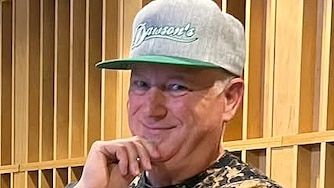
Among those seeking to replace Harris is Adam Wood, who was once the party’s executive director. He was pushed out of that job when he made an unsuccessful run for a state Senate seat in Baltimore County this year, losing in the primary.
Wood says his experience helping run the party, working on campaigns and campaigning himself gives him perspective on what the party needs.
“It’s not necessarily a knock on anybody in particular,” Wood said. “It’s when something isn’t going right, you try and change things up.”
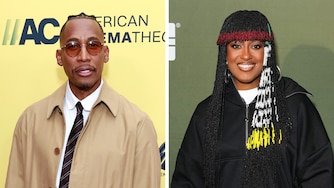
Yahu Blackwell, who unsuccessfully ran for state Senate in Baltimore County, is also competing for chair, saying the Maryland Republican Party needs a rebranding.
“Republicans got their asses kicked this election,” Blackwell said. As a 39-year-old Black man, he thinks he can bridge racial and cultural divides and draw new interest to the party.

Candidates also need more support from party leaders and infrastructure, Blackwell said. Although the Baltimore County party offered help to his campaign, he got “zero support” from the state party.
A website promoting the candidacy of Gordana Schifanelli, who ran unsuccessfully for lieutenant governor in 2022, argues the party is built only to protect U.S. Rep. Andy Harris, the husband of the state party chair, rather than to help GOP candidates up and down the ballot.
Schifanelli, a MAGA stalwart, said there’s a problem with the “draft Gordana” effort. She’s a resident and registered voter in Florida. She splits her time between the Sunshine State and Maryland.
Schifanelli tried to run for party chair four years ago, but her nomination attempt at the convention was shot down on procedural maneuvers.

“I realized back then that MDGOP is in complete shambles and they have no strategic vision, mission or idea how to be a responsible party,” Schifanelli said. “They’re just all over the place.”
The Maryland Republican Party has work to do if it wants to regain the prominence it had when there was a GOP governor and multiple county executives, Eberly said.
One factor could work in the GOP’s favor, he said. Just as this year was a blue wave, there’s bound to be a red wave down the line. Republicans will need to build up their fundraising and network of candidates to capitalize when momentum swings in their direction.
“Maryland Republicans are sort of in the wilderness, but they’ve got four years to find their way out of it,” Eberly said.
But it’s going to take work to get there, Eberly said. Top-of-the-ticket candidates like Cox are getting less than one-third of the vote, there’s only one reliably Republican congressional seat that could be wiped out with redistricting, and independent voters are on track to overtake the GOP in registration.
Maryland’s electorate is 53% Democrats, 23% Republicans and 23% unaffiliated voters. There are only about 1,900 more Republicans than independents, according to state data. Since Hogan’s second gubernatorial victory, Republican registrations have grown by less than 1%.

“Getting anyone to take a leap of faith and invest in the party is going to be the challenge,” Eberly said.
Hogan offered a blueprint for how Republicans can win in Maryland that other candidates have not followed.
Hogan carefully chose his priorities, taking a pass on most divisive social issues in order to persuade enough Democratic and unaffiliated voters to vote for him twice. His first win in 2014 coincided with a red wave, but his second in 2018 was a blue wave year — and he joked that he rode a “purple surfboard” to victory. (Hogan could not replicate his success in 2024, losing a U.S. Senate race to Angela Alsobrooks.)
Hogan has washed his hands of responsibility for the state of the Maryland Republican Party. He said in an interview that it’s frustrating to see the state and national parties fumble with voters.
He said Republicans are too focused on the far right of the party, and in a state like Maryland that’s just a fraction of a fraction of the total electorate.
“Candidates matter. Messaging matters. What you’re saying you’re going to do matters,” Hogan said. “You can’t just put on the red uniform and say the red meat stuff and expect you’re going to convert a bunch of people.”
Asked if he sees a role for himself in the future of the party, Hogan made clear he’s moved on.
“I don’t have any obligation to try to keep helping the guys that aren’t paying attention to me or listening,” he said.



Comments
Welcome to The Banner's subscriber-only commenting community. Please review our community guidelines.